Business Owner: Don’t Hire This Type of Accountant / CFO
The one you’re about to hire might be the reason LHDN comes knocking.
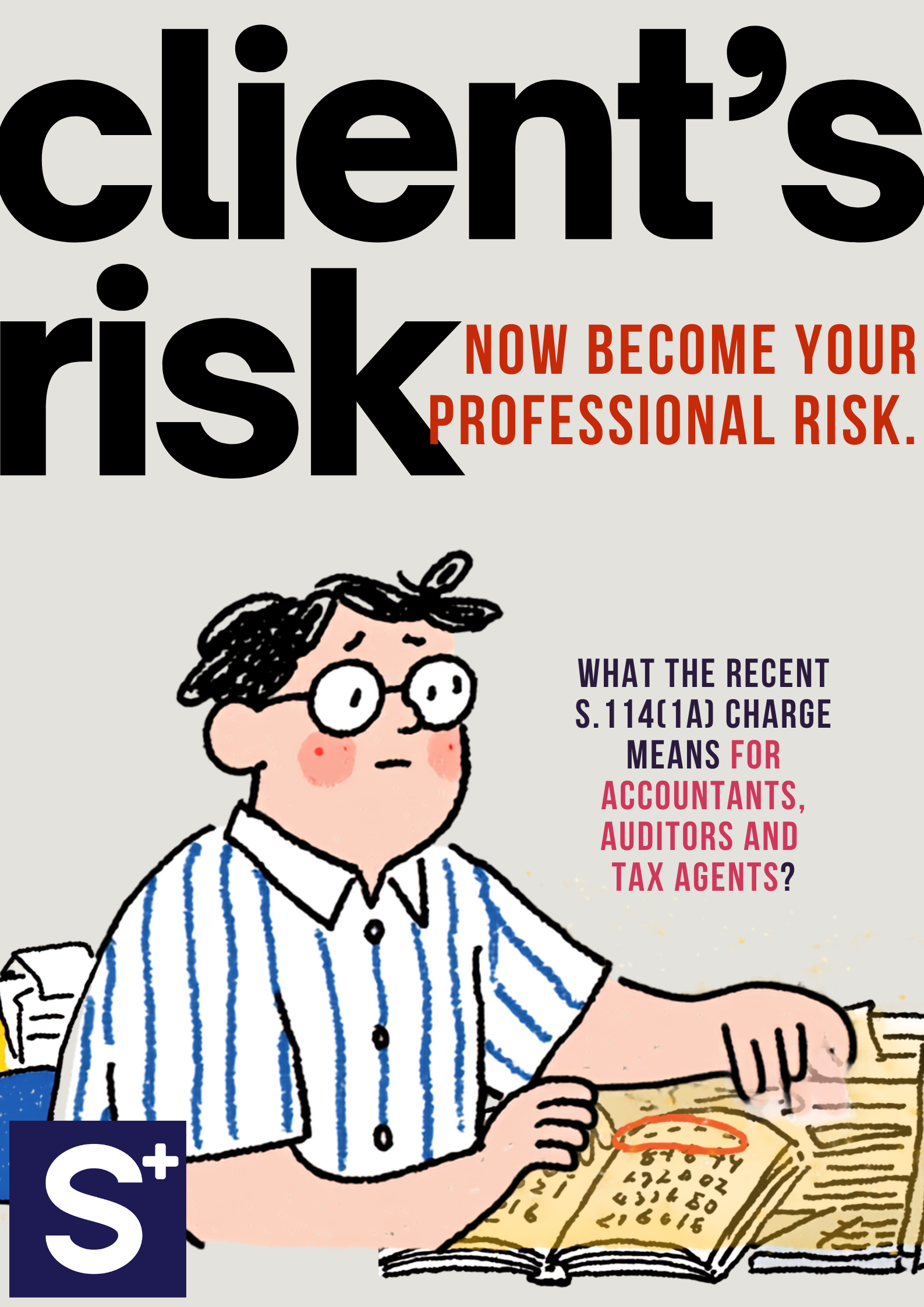
You think your tax agent is handling it. Here’s what LHDN actually checks — and it’s not what most business owners assume.
Most companies don’t fail an audit because they broke a rule they didn’t know existed. They fail because their systems, their chart of accounts, and their documentation don’t match the story they’ve been telling everyone else. And that gap? It usually traces straight back to one hire — the accountant or CFO who was never built for what the job has become.
TL;DR
- AI already does the routine accounting — data entry, reconciliations, invoicing — faster and cheaper than a human. If your accountant just “keeps the books tidy,” you’re paying for a machine’s job.
- In Malaysia, company directors are personally and jointly liable for unpaid tax, SST, EPF, SOCSO and customs duty — up to 5 years’ jail or a RM3 million fine under the Companies Act 2016. Resigning doesn’t erase liability that arose on your watch.
- The rules have moved fast: SST expanded twice, e-Invoicing thresholds were revised again and again, stamp duty shifted to self-assessment, payroll costs rose, and transfer pricing penalties sharpened.
- Your accountant/CFO is now the connective tissue between LHDN, auditors, bankers, lawyers, HR and SSM — one dropped relationship and the whole structure wobbles.
- Don’t hire the five “file-it-and-forget” types. Hire one who keeps learning and can defend your numbers when the audit letter arrives.
Will AI Replace Your Accountant or CFO?
Partly — and that’s exactly the problem. AI already does the boring part better than they do: data entry, reconciliations and invoice processing, all automated, faster and more accurate. So if the accountant you’re paying is still proudly “keeping the books tidy” and calling it a day, you’re not paying for expertise. You’re paying for a task a machine already does for free.
Five Types of Accountants / CFOs to Never Hire
Point at the one that looks familiar. That flash of recognition? That’s the whole problem.
Can a Director Be Personally Liable for Company Tax in Malaysia?
Yes — and this is the part that should keep you up at night, not your accountant. Under Section 213 of the Companies Act 2016, directors owe a personal duty to exercise reasonable care, skill and diligence — breach it, and you’re looking at up to 5 years imprisonment or a RM3 million fine. Directors can be held personally and jointly liable for the company’s unpaid EPF, SOCSO, customs duty, sales tax, and monthly tax deductions.
If you’re a director who doesn’t know tax and compliance inside out, you are the one most exposed — not your accountant. They can walk away from a bad filing. You can’t walk away from your name on the SSM register.
Does Resigning as a Director Remove Tax Liability?
No. Malaysian courts have held that liability follows the director who was in office when the tax obligation arose — not when enforcement happens. A former director of Naza Kia Sdn Bhd resigned from the board in 2013, probably thinking that closed the chapter.
It didn’t.
The company owed unpaid customs duty and sales tax dating back to 2001–2002 — a decade before he resigned. Customs came after him personally, then asked Immigration to slap a travel ban on him until the debt was settled. He fought it in court. He lost.
The High Court’s ruling was brutal in its simplicity: the question isn’t whether you’re a director when enforcement happens — it’s whether you were a director when the liability arose. Under Section 22C of the Customs Act 1967 and Section 26 of the Sales Tax Act 1972, directors carry joint and several liability — Customs doesn’t even have to chase the company first. They can come straight for you.
Joint and several liability isn’t jargon. It means the taxman can knock on your company’s door, or skip it entirely and knock on yours. Comparable provisions exist for income tax and statutory contributions too. Your accountant isn’t managing “the company’s” risk. They’re managing yours, personally, passport included.
What Does a Modern Accountant or CFO Actually Do?
A modern accountant or CFO isn’t managing a ledger anymore. They’re the connective tissue between everyone who can make or break your business — LHDN and Customs, auditors, bankers, lawyers, HR, the company secretary, and you.
- LHDN & Customs — audits, SST, disputes over your declarations
- Auditors — validating the story your numbers tell
- Bankers & investment bankers — financing, covenants, credit lines
- Lawyers — contracts, disputes, tax litigation when negotiation fails
- HR — payroll, EPF, SOCSO, director remuneration exposure
- SSM & company secretary — statutory filings, governance
- You, the boss — turning all of the above into a decision you can actually act on
What Malaysian Tax Rules Changed in 2024–2026?
This isn’t “the regulatory landscape is evolving.” These are the specific, dated changes that have hit Malaysian businesses in just the last three years — each one a place your numbers, your payroll, or your filings can quietly fall out of line.
- SST got bigger — twice. Service tax rose from 6% to 8% on 1 March 2024. Then on 1 July 2025 the scope was widened to pull in leasing and rental, construction, financial services, private healthcare, education and beauty services — with sales tax on non-essential goods reset to 5% or 10%. Two expansions in sixteen months, each one dragging in services and businesses that were never in the net before.
- e-Invoicing thresholds moved again and again. The ladder ran from RM100 million and above (Aug 2024) to RM25–100m (Jan 2025) to RM5–25m (Jul 2025) down to RM5m (Jan 2026) — then LHDN moved the goalposts once more, lifting the exemption to businesses under RM1 million and scrapping the final small-business phase in December 2025. If your accountant “set it up once,” they set it to a deadline that has since shifted underneath them.
- Stamp duty became your problem, not LHDN’s. From 1 January 2026, calculating, declaring and paying stamp duty shifts to you under the Self-Assessment regime (STSDS). File the return and it’s a deemed assessment on the spot — 30 days to pay, records kept for 7 years, and penalties up to 100% of any underpaid duty if an audit finds the gap. Phased in through to 2028.
- Payroll got heavier from three directions at once. The SOCSO and EIS wage ceiling rose from RM5,000 to RM6,000 on 1 October 2024 — more contribution on every mid-level salary. The HRD Corp training levy now reaches industries it never used to touch. And the Employment Act 2022 reset the floor: near-universal coverage, a 45-hour work week, 98 days’ maternity and new paid paternity leave.
- Transfer pricing grew teeth. Contemporaneous documentation is now expected before HASiL asks — and under Section 140A a 5% surcharge can land on a TP adjustment whether or not there’s any additional tax to pay, with penalties scaling by how late your file appears.
None of this waited for anyone to catch up. An accountant who mastered 2021’s rulebook and stopped learning is operating on expired knowledge — and you’re the one holding the bag when LHDN, Customs, or SSM notices the gap.
What Skills Should a Modern Accountant or CFO Have?
Hard skills get them in the room. Soft skills keep them in the room.
| Hard Skills | Soft Skills |
|---|---|
| Tax, SST, TP, Companies Act fluency | Communication that doesn’t put you to sleep |
| Financial modelling & forecasting | Negotiation with regulators, banks, vendors |
| AI-assisted analysis & data literacy | Strategic thinking, not just reporting |
| Risk analysis & internal controls | Ethics — the one thing no AI has |
An accountant with only one column is half an accountant. Don’t hire half a person to defend your whole business.
The One Skill That Actually Matters Now
Forget the certifications on the resume for a second. The single biggest skill an accountant needs today is the ability to learn and reinvent, repeatedly, on a moving deadline. Technical knowledge has a shelf life measured in months, not years, given how fast e-Invoicing, TP guidelines, and employment law have shifted in just the last five years.
But here’s the tension nobody resolves cleanly: while everything around the accountant is changing, the one thing that can’t change is consistency. Going concern, comparability, and consistent treatment of your numbers year over year are the foundation the board, the bank, and the auditor all rely on. Yet the ground that consistency stands on keeps shifting underneath it. That paradox is the real job now — staying consistent in output while constantly reinventing the method.
The accountant worth keeping has already moved up — supervising AI outputs, questioning what it produces, using the time it frees up to actually think about your business instead of just processing it. The one worth firing is still doing the job a machine already replaced, and just doesn’t know it yet.
Frequently Asked Questions
Can a company director be personally liable for unpaid company tax in Malaysia?
Does resigning as a director remove tax liability in Malaysia?
Will AI replace accountants and tax agents?
What should I look for when hiring an accountant or CFO in Malaysia?
Are directors liable for unpaid SST, SOCSO and customs duty?
What Malaysian tax and compliance rules changed between 2024 and 2026?
You Can’t Delegate the Liability
You just read why it’s the director — not the accountant — that LHDN, Customs and SSM come after. Our seminars get you and your finance team current on the exposures that actually matter: transfer pricing, SST, e-invoicing and director tax.
See Upcoming Seminars →Browse all upcoming Synergy TAS Plus seminars and pick the one that fits your exposure.
This article is general information, not legal or tax advice. Case details and statutory references are summarised for illustration — confirm specifics with a licensed tax agent or lawyer before acting.