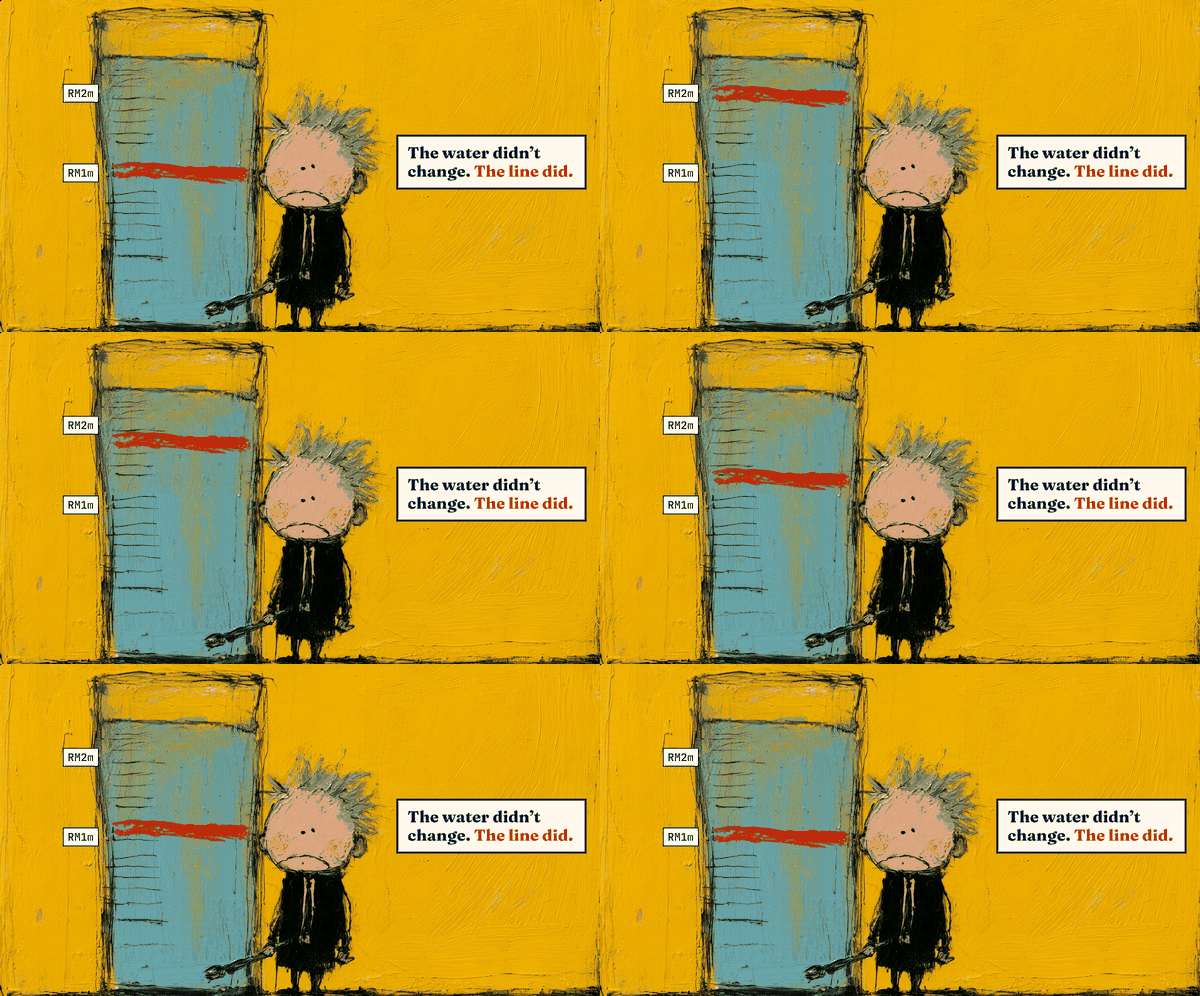
You didn’t earn a ringgit more. You’ll pay RM20,000 more.
Every year, from 1 January 2027. Unless you plan before then.
Budget 2027 moved the 30% tax line from RM2 million down to RM1 million. Earn RM2 million or more, and that’s RM20,000 more tax a year on the same income. Earn RM1.5 million, RM10,000.
Most people will find out in 2028, when the bill arrives. By then, most of the choices are gone.
The best time to change it is the next two months. This post shows you how tax planning does it.
First, what changed
One line moved. Here’s exactly where.
PLAIN WORDSThink of your income as water filling a tank. Lines are painted up the side. Water below a line pays one rate; water above it pays the next. Budget 2027 repainted one line: the 30% line moved down, from the RM2 million mark to the RM1 million mark. The water didn’t change. The line did.
The water is your chargeable income: what’s left after business expenses, deductions and reliefs. Not your sales.
CHANGE 1
30% now starts at RM1 million
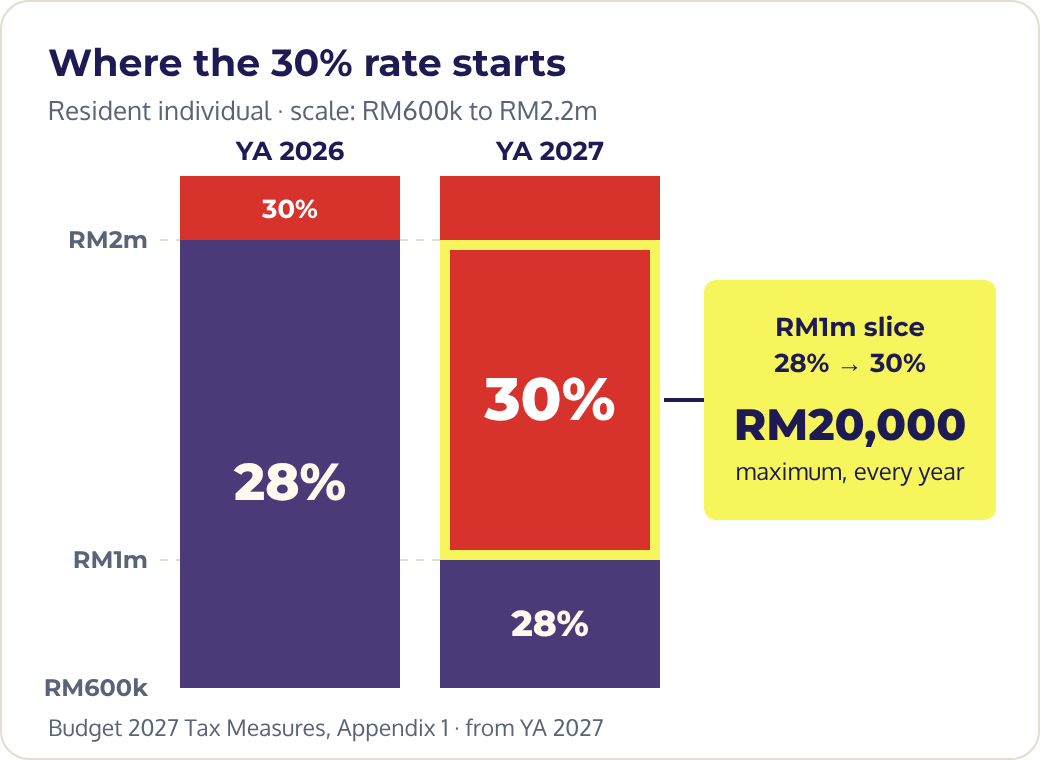
Up to YA 2026, 28% ran from RM600,001 to RM2 million. From YA 2027, every ringgit above RM1 million is taxed at 30%.
CHANGE 2
Lower rates for the middle
18% for RM70,001–100,000 (from 19%). A new 24% band for RM100,001–150,000 (from 25%). Up to RM800 less a year.
CHANGE 3
Individual relief: RM12,000
Up from RM9,000, unchanged since YA 2010. Wider reliefs count only for spending done in 2027.
All three apply to resident individuals: sole proprietors, partners, LLP partners, and directors on their personal income.
None of it is law yet. And YA 2027 hasn’t started. This is the window. How will 2027 income be earned? By whom? When will the spending happen? Right now these are still choices, not corrections. To see why that matters, meet Mr. Tan.
Meet Mr. Tan
He didn’t earn a ringgit more. Watch what happens anyway.
Mr. Tan is a partner in a building-materials trading partnership in Ipoh. His share of the profit: about RM2.2 million of chargeable income a year. Same as last year. Same as next year. Here’s his tax bill, before and after.
Source: Budget 2027 Tax Measures, Appendix 1.
RM20,000
more tax every year from YA 2027, on the same income
RM100,000
over five years if nothing is planned
RM1,000,000 slice (RM1m–RM2m) × 28%, YA 2026
RM280,000
Same slice × 30%, YA 2027
RM300,000
Extra tax a year
RM20,000
It’s capped. At RM1.2m chargeable income the extra is RM4,000; at RM1.5m, RM10,000; from RM2m up, RM20,000.
So Mr. Tan asks his accountant what can be done.
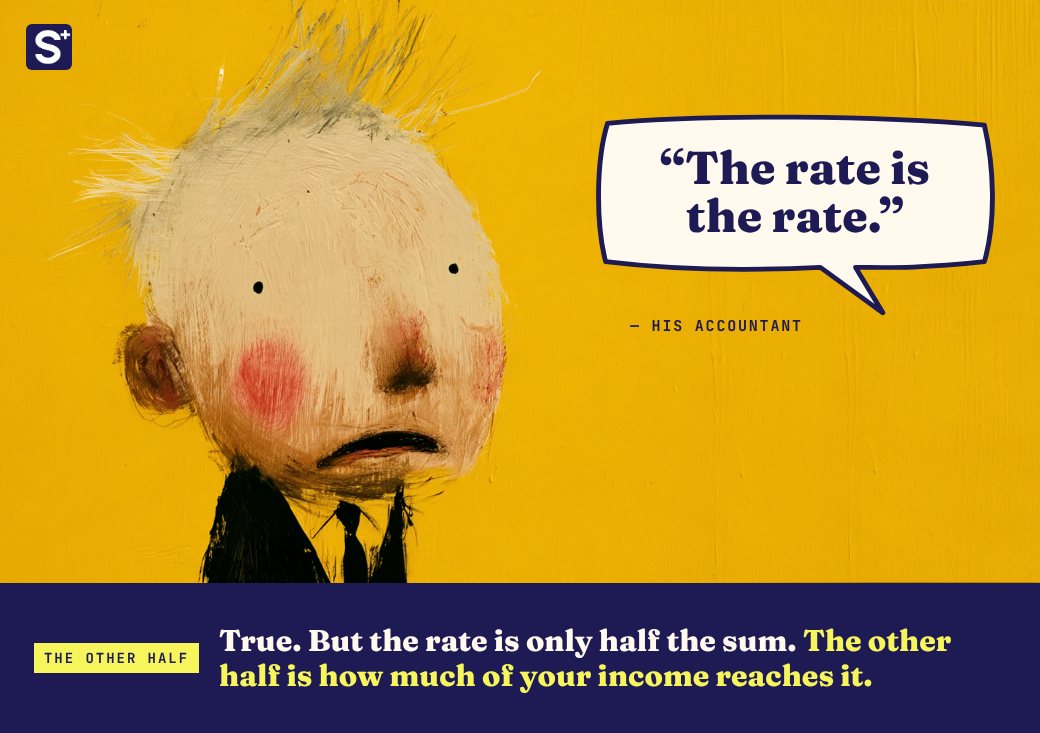
That other half is still open, until Mr. Tan’s 2027 income is earned.
Not earning RM2 million? Keep reading. Mr. Tan is just the clearest example. The mechanism is the same at any income, for any business, for any tax change. Once you understand how it works, you can use it everywhere.
So how does tax planning work?
Planning doesn’t fight the rate. It decides what reaches it.
Go back to the tank. You can’t move the painted line. That’s the law. But before the water flows, you can decide when it flows, which tank it flows into, and what it’s used for on the way.
A planner asks four questions, before the income exists:
WHENis the income earned? 2026 and 2027 meet different lines.
WHOearns it? You, your partners or your company: different rules.
WHATis spent, and in which year?
HOWis it recorded on the day it happens?
Sounds simple. Here’s the catch.
The part that decides everything
A plan is only as good as its evidence.
Every saving has to survive one question from LHDN: “Why?” The answer is never your plan. It’s your records. That puts every plan in one of three boxes.
REAL
It happened, and the record proves it.
The money really moved.
There is a business reason, not only a tax reason.
Written on the day, and it matches the bank, payroll and e-invoice.
FAKE
Papers with nothing behind them.
Backdated documents.
Arrangements that exist only on paper.
LHDN sets it aside, and penalties follow.
REAL FAKE
Real papers. No real substance.
A company that does no work.
A family salary with no job behind it.
A fee with no service. It looks real until LHDN asks why.
The real fake is the dangerous one, because the owner believes it’s real. The papers are genuine; the substance isn’t. In a dispute it costs you twice: the tax you thought you saved, plus penalties.
DECORATION
Looks good on paper. Falls apart at the first “why”.
DEFENCE
Real substance, recorded on the day. Still stands when LHDN asks.
Your records are either the sword in LHDN’s hand, or the shield in yours. Which one is decided on the day of the transaction, not at the audit.
Your questions, answered short
What business owners are asking us since the Budget.
My income is about RM1.3 million. Am I affected?
Yes. RM300,000 above RM1 million × 2% = RM6,000 more tax a year.
Can I just bring income forward into 2026?
Only if it’s commercially real. A paper shift is a real fake.
We split partnership profits 50/50. Does that matter now?
It decides how much of each partner’s share crosses RM1 million.
I’m a director. Is the 30% on salary, fees and dividends?
Each is treated differently. That’s the planning question.
The short answers are easy. The right answer depends on your structure, and on your evidence.
A rare opportunity
Most tax knowledge keeps you safe. This round, you see it save tax.
USUALLYComplianceFile it right, on time.
USUALLYRisk managementDefend it when LHDN asks.
THIS ROUNDTax savingPlan it, lawfully, before the income is earned.
The third job is the one people rarely get to watch. Uniquely this round, Dr. Choong Kwai Fatt shows you how tax planning works to save tax, in action, using a tax hike like this one as the live example.
And it is not only for people earning RM2 million. The RM20,000 is the example. The mechanism is the lesson. Understand how it works once, and you can see the saving in every Budget that follows.
BUDGET 2027 SEMINAR
Learn six lawful ways to manage the extra RM20,000.
Dr. Choong Kwai Fatt walks through each one: who it fits (sole proprietor, partner, LLP partner, company owner), what must be in place before 1 January 2027, and what must be done during the year.
KUALA LUMPUR15–17 Dec 2026The Westin Kuala Lumpur · Limited seats
JOHOR BAHRU26–28 Jan 2027DoubleTree by Hilton Johor Bahru · Limited seats
This article is general information, not legal or tax advice. It describes proposals in the Budget 2027 speech of 9 October 2026, which may change before they become law. Mr. Tan is an illustrative composite. Confirm your own position with a licensed tax agent before acting.
Tan Lee Ling
Tax Consultant by training in the Big Four and trained several years with Dr Choong. Being a Chartered Accountant with a law degree. Specialised in compliance, tax planning and tax investigation in her early years. Being in tax for 12 years, to her Tax is like a tree, it is the life force for the country, tax is dynamic, continuously changing and growing. Lee Ling is the conduit in charge of not just sharing these tax changes, also to bring Dr Choong's brilliant tax planning to the tax professionals and business community.


 REAL
 FAKE
 REAL FAKE
 DECORATION
 DEFENCE